

On April 21, 2026, the International Organization for Standardization published the new edition of ISO 14001, the world’s most widely used standard for environmental management systems. Eleven years after the last revision, the 2026 edition responds to a different operating context: climate risks, biodiversity loss, and rising transparency expectations from investors and regulators. This article explains what changes in ISO 14001:2026, what the transition means for certified organizations, and how the revision fits into the broader ISO 14000 family, including a video summary and interactive quiz.
30 years of ISO 14001 and why the revision is happening now
ISO 14001 was introduced 30 years ago and is now the most widely adopted environmental management standard in the world. More than 600,000 organizations in over 180 countries are certified to ISO 14001 across more than one million sites. Three decades of structured progress in environmental management have turned the standard into a global reference point that goes far beyond basic compliance.
The 2026 edition is not a routine update. It responds to three global shifts that accelerated after the 2015 version:
- Climate change and biodiversity loss are no longer distant risks. They are immediate, systemic challenges.
- Expectations from investors, regulators, and customers for transparency and defensible evidence have increased sharply, driven by frameworks such as CSRD, supply-chain due diligence requirements, and TNFD.
- Environmental impacts are increasingly interconnected with supply chains, natural capital, and ecosystem services.
The revision was not meant to reinvent ISO 14001. It was meant to sharpen and strengthen it so the standard is easier to understand, easier to implement, and better aligned with integrated management systems.
Video: The core changes in 10 minutes
If you prefer the full overview first, this 10-minute video summarizes the five core changes, the three-year transition window, and a practical six-step transition plan.
Quiz: Test your knowledge of ISO 14001:2026
Ten questions on the standard, the revision, and the transition. Take the quiz before reading, then again afterward to close the remaining gaps.
What exactly changes in ISO 14001:2026?
The revision does not introduce a completely new standard, but it does add meaningful clarifications in the right places. Five change areas matter most in practice.
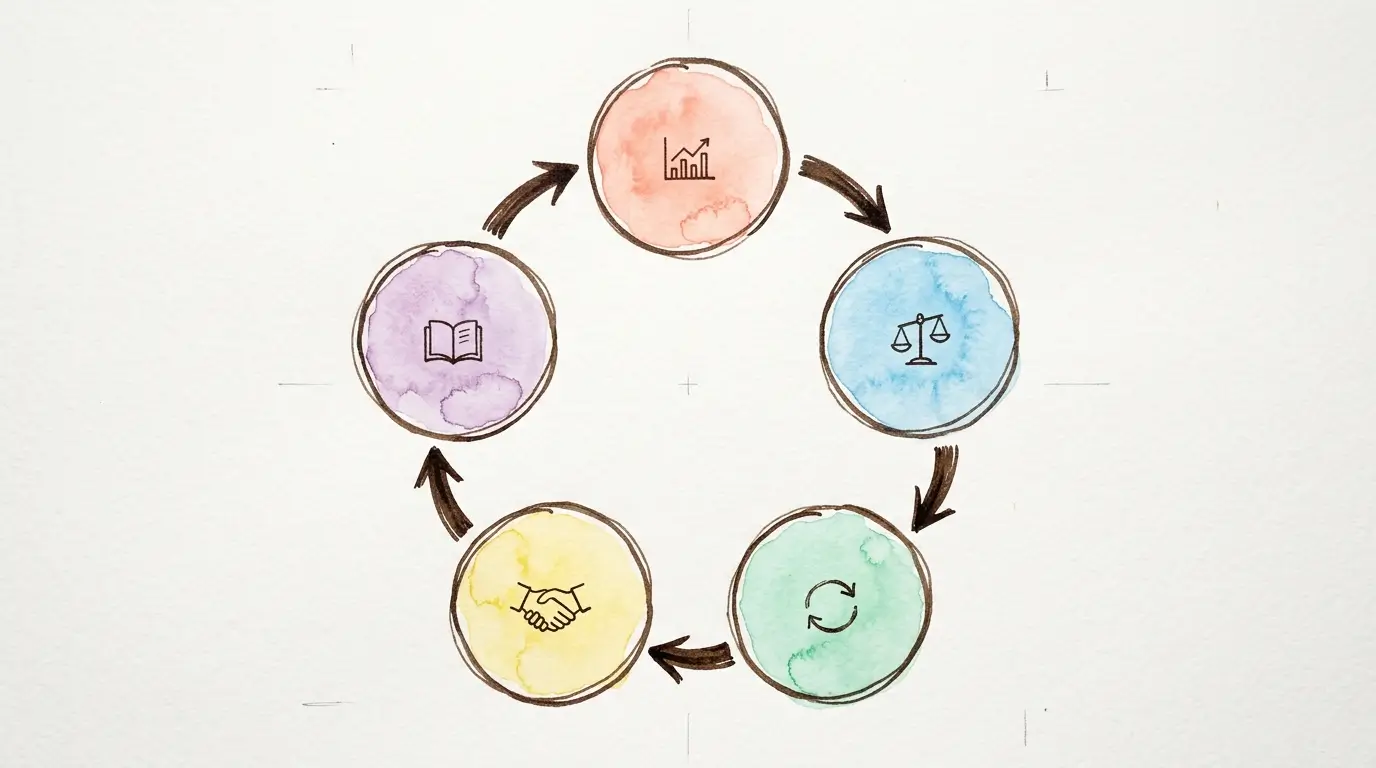
1. Context and environmental conditions are now explicit
Clause 4, the context of the organization, now explicitly names examples of environmental conditions that must be considered when designing the management system: pollution, availability of natural resources, climate-change priorities, and biodiversity loss.
Climate change and biodiversity were already possible significant environmental aspects in the 2015 version. By naming them directly, the revised standard makes it much harder to treat them as optional topics. Organizations are expected to address them seriously within the EMS.
2. Risks and opportunities become one connected concept
The 2015 edition focused on “risks.” The 2026 revision reframes this as risks and opportunities in Clause 3 and the new Clause 6.1.4. That brings the risk-based logic into closer alignment with ISO 9001 and anchors it more strategically.
In practice, this means identifying environmental aspects is no longer enough. Organizations also need to systematically identify opportunities to improve environmental performance, such as circular-economy approaches, energy-efficiency projects, or new market opportunities created by ESG-aligned products.
3. New clause on planning changes (6.3)
Like other management system standards, ISO 14001 now includes a dedicated clause on planned change. Organizations must explain how they respond to business and environmental changes, whether those involve new production methods, site relocations, or changing regulatory requirements.
4. “Outsourced” becomes “externally provided products, services, and processes”
The old term “outsourced” is replaced by “externally provided products, services, and processes.” This broadens the focus to the full supply chain and contractors, which fits current expectations from CSRD, CBAM, and supply-chain legislation.
5. Annex A has been fundamentally expanded
The most important implementation advice is simple: read Annex A. The guidance has been significantly expanded and now gives clearer interpretation on:
- Life-cycle perspective, with concrete examples
- Leadership, organizational culture, and employee involvement
- Environmental responsibility in the supply chain
- Harmonized structure and alignment with ISO 9001, ISO 45001, and related standards
In addition, the clauses on improvement and continual improvement have been combined to sharpen the focus on actual performance improvement.
Do existing ISO 14001:2015 certificates remain valid?
The short answer is yes.
The transition period is expected to be three years, consistent with IAF practice for management-system revisions. That means organizations currently certified to ISO 14001:2015 will likely have until around April 2029 to transition to the new version. The transition can be handled either as a standalone audit or during regular surveillance audits. In most cases, we recommend using the surveillance cycle because it reduces effort and cost.
The 6-step transition plan
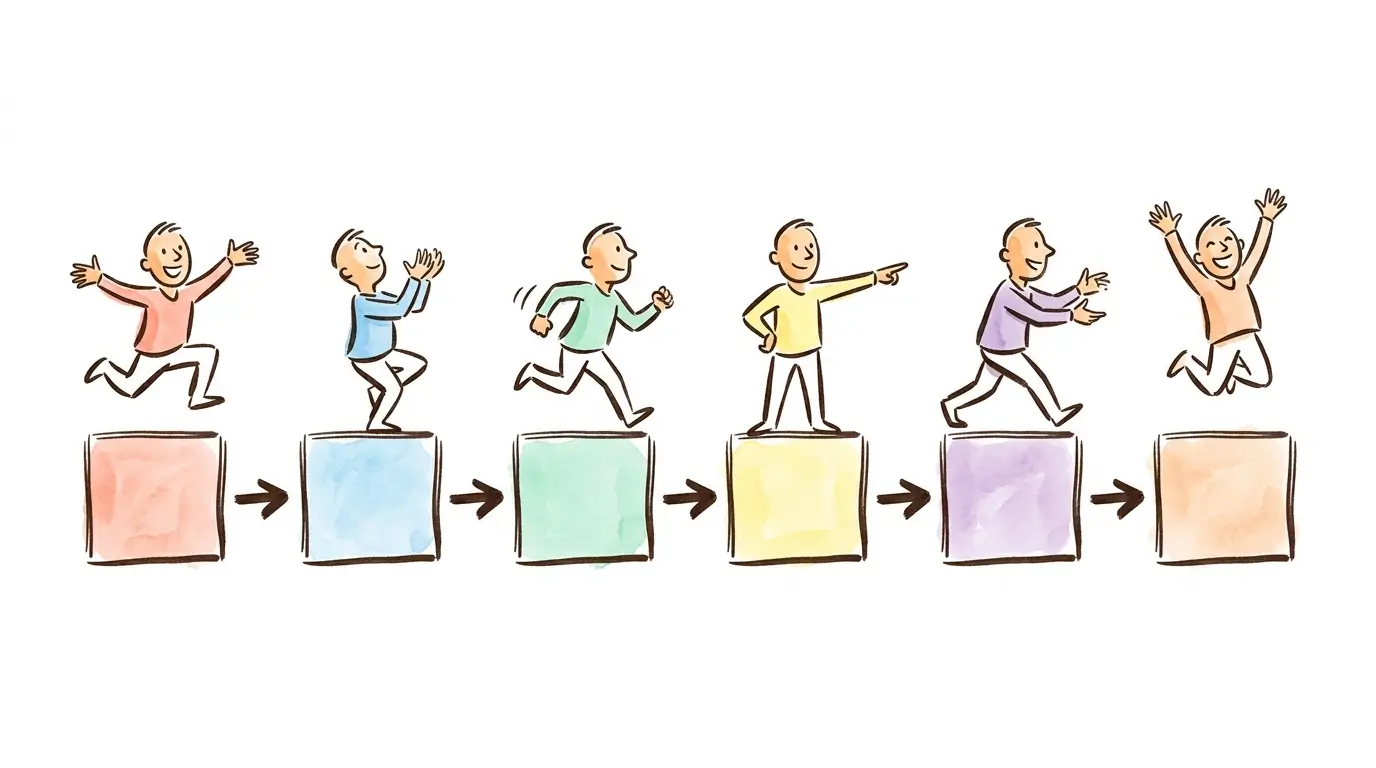
A six-step sequence works well for both organizations already certified to ISO 14001 and companies implementing the standard for the first time:
- Understand the changes. Read the revised requirements and identify what is new or materially different, especially around climate, life cycle, and risks and opportunities.
- Run a gap analysis. Compare the current EMS against the new requirements and prioritize the highest-risk or highest-impact gaps.
- Update the EMS. Adjust processes, documented information, and controls, then integrate the changes into actual operations rather than limiting them to paperwork.
- Build competence and awareness. Train leadership, internal auditors, and operational teams so the new expectations are applied consistently.
- Verify readiness. Run internal audits against the revised standard and close nonconformities before the certification body arrives.
- Involve the certification body early. Discuss timing and format, standalone transition audit or surveillance audit, as early as possible. Early planning creates options.
The key principle is integration over checkbox compliance. The most effective transitions embed the changes into the way the organization actually works, not just into updated manual text.
Self-declaration or certification? Two legitimate paths
Do you need to certify ISO 14001 at all? No, but the two routes produce very different effects:
Self-declaration builds a system. Certification builds trust.
Self-declaration is flexible and cost-efficient. The organization implements the requirements internally and evaluates conformity through self-assessment and internal audit. This route can make sense for companies that are building internal capability, piloting an EMS, or operating in markets where external certification is not expected.
Independent certification by an accredited body provides external credibility. Supply chains increasingly require certificates, and regulators and investors place much more trust in independent verification than in self-declarations. We explain the difference in more detail in ISO consulting vs certification body.
ISO 14001 in practice: Two application patterns
Large organizations: ISO 14001 as a procurement standard
Large infrastructure operators, for example the Canadian regional transit operator Metrolinx in Toronto, increasingly integrate ISO 14001 requirements into standardized contract clauses for construction and expansion projects. In multi-billion-dollar programs, contractors are required to operate an EMS aligned with ISO 14001.
The benefit is consistent reporting across projects, structured tracking of soil handling and spills through shared systems, and reduced regulatory risk. Climate-resilience assessments for major projects can also be integrated more easily.
SMEs: From mid-sized company to airport contractor
At the other end of the scale, the UK road and airfield markings company Jointline, with around 125 employees, has used ISO 14001 since 2010 as a strategic framework. Since then, the company has:
- Replaced single-use plastic packaging for road-marking materials with reusable sleeves in cooperation with suppliers
- Installed solar panels on vehicles to power warning lights without engine idling
- Secured access to major contracts with organizations such as National Highways and Heathrow Airport, where EMS evidence is a prerequisite
- Used the ISO 14001 structure to integrate further standards such as ISO 45001, ISO 44001, ISO 39001, and PAS 2080 for carbon management
The standard is structured but flexible, and the documentation burden scales with organizational size. For SMEs in particular, ISO 14001 is often the first structured bridge into broader ESG and sustainable-finance topics.
The ISO 14000 family: ISO 14001 does not stand alone
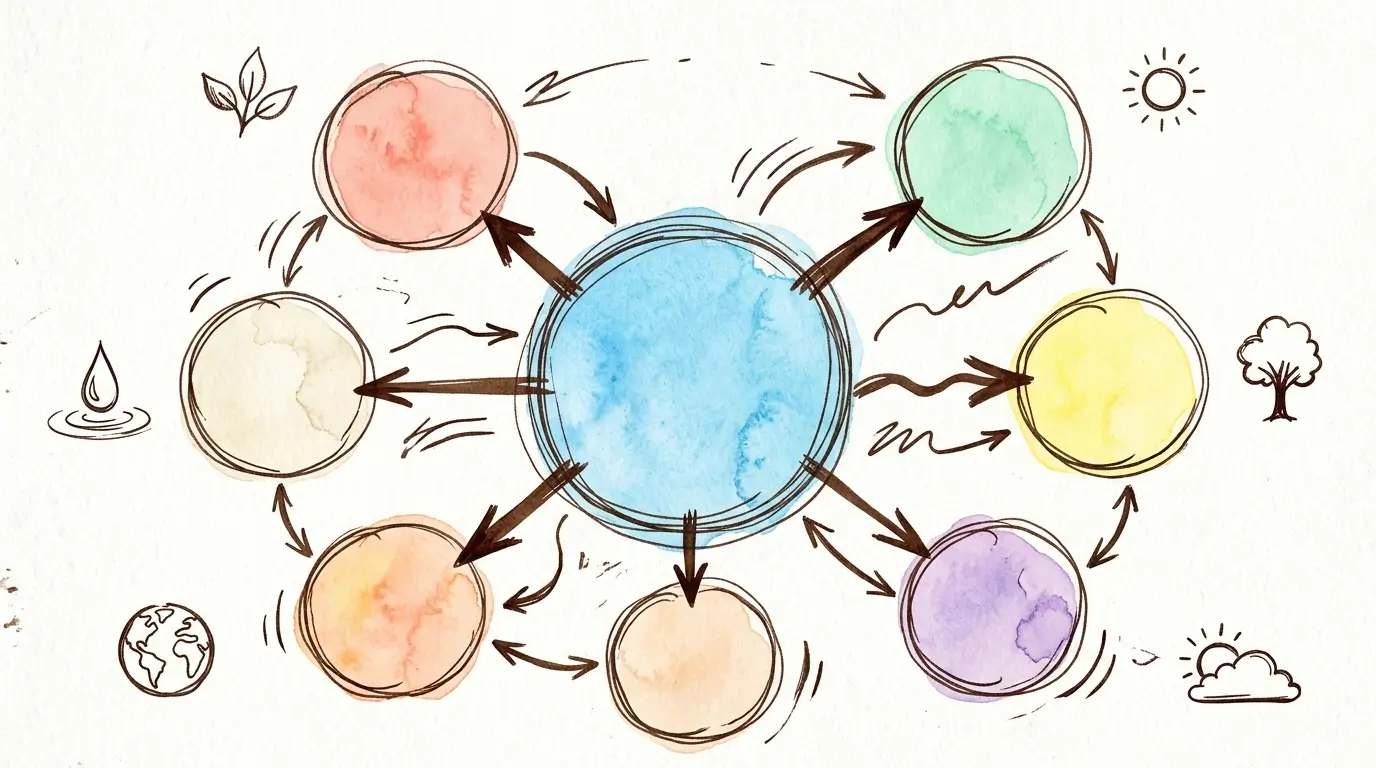
ISO 14001 is the backbone of the EMS, but not the whole picture. The responsible technical committee, ISO/TC 207, currently includes 77 published standards and 18 more under development, supported by 128 member countries. Around the core standard sit several complementary standards:
| Standard | Focus | Status |
|---|---|---|
| ISO 14002-2 | Water-related environmental aspects | Published |
| ISO 14002-3 | Climate-related environmental aspects (FDIS) | Close to publication |
| ISO 14002-4 | Resources, circularity, and waste (DIS) | Draft International Standard |
| ISO 14025 | Environmental product declarations (EPD) | FDIS |
| ISO 14054 | Natural capital accounting for organizations | Published in 2025 |
| ISO 14060 | Net-zero-aligned organizations (CD) | Committee Draft |
| ISO 17298 | Biodiversity, conservation, and restoration | In development |
The newer generation of standards, especially ISO 14054 for natural capital accounting and the upcoming ISO 17298 on biodiversity, uses EMS data and structures it for financial decision-making. Environmental performance is increasingly a financial-risk issue, and an ISO 14001-based EMS provides the underlying data foundation.
What ISO 14001:2026 means for different types of organizations
For SMEs
- A structured but flexible framework, with documentation effort that scales to the business
- Support for customer requirements and supply-chain expectations
- A practical first step into wider ESG topics such as CSRD preparation, ISO 14064, and PAS 2080
- Better positioning for funding programs and green-finance conversations
For larger organizations
- More systematic management of environmental risks and opportunities
- Direct input into CSRD, TNFD, and supply-chain reporting
- Less duplication through integration with ISO 9001, ISO 45001, and ISO 50001
- Stronger governance, compliance, and stakeholder credibility
How Sternberg Consulting supports the transition to ISO 14001:2026
We support organizations across Germany and the wider DACH region with both first-time implementation and transition to the new edition of ISO 14001. Our approach is pragmatic, avoids over-documentation, and focuses on integrating the requirements into existing management systems. Support ranges from gap analysis against the 2026 requirements to EMS documentation updates, training for leaders and internal auditors, and audit preparation with the certification body. Organizations running ISO 14001 alongside ISO 9001, ISO 45001, or ISO 50001 benefit in particular from our integrated management-system approach. You can learn more on our ISO 14001 environmental management consulting page or contact us for an initial gap-analysis discussion.
Frequently asked questions about ISO 14001:2026
When was ISO 14001:2026 published?
The new edition was officially published by ISO on April 21, 2026.
Do we need to completely redesign our existing EMS?
No. The revision is better understood as an evolution than a revolution. For most organizations, a focused gap analysis followed by targeted updates is enough. A full redesign is only necessary in exceptional cases.
Which clauses are new or materially changed?
New clauses include 6.1.4 for risks and opportunities as one combined logic and 6.3 for planning changes. Material revisions also affect Clause 4 on context and environmental conditions, the terminology around outsourcing, internal audit expectations, and Annex A overall.
Is climate change now mandatory in ISO 14001?
Climate change was already indirectly covered as a potentially significant environmental aspect. What is new is that it is now explicitly named as an example of a relevant environmental condition in Clause 4. Organizations need to show how they address climate-related risks and opportunities within the EMS. That follows the logic of the ISO climate action amendment of 2024.
How does ISO 14001:2026 relate to CSRD and ESRS?
ISO 14001 provides the operational backbone for many ESRS E datapoints, especially E1 climate, E2 pollution, E3 water, E4 biodiversity, and E5 circular economy. Organizations with a well-run EMS already have much of the process and data foundation needed for CSRD reporting.
How long does the transition to ISO 14001:2026 usually take?
For a mature EMS, we typically plan 3 to 6 months: 2 to 4 weeks for gap analysis, 6 to 12 weeks for documentation and process updates, around 4 weeks for training and internal audits, and then coordination with the certification body. SMEs without an existing EMS should expect roughly 6 to 12 months for first implementation.
Is Annex A mandatory?
Formally, Annex A remains informative rather than mandatory. In practice, however, the 2026 Annex A is the central source for correct interpretation and practical implementation. Ignoring it creates avoidable audit disputes and misreadings of the standard.

Related articles
- ISO 14001 explained simply: definition, requirements, and benefits
- ISO 9001:2026, prepare for the new requirements
- ISO climate action amendment 2024: what actually changes?
- Risk-based thinking in ISO 9001: a systematic approach to risks and opportunities
- ISO consulting vs certification body: what is the difference?
- How to prepare for an ISO audit without internal expertise

