

What Does an Auditor Do? Tasks, Salary & Job Description
Auditors systematically examine whether an organization’s processes and management systems comply with ISO standards like ISO 9001 or ISO 14001. This guide from certified ISO auditors covers everyday responsibilities, the difference between internal and external auditors, audit types, career paths, and salary expectations in Germany.
ISO Consulting vs Certification Body – What’s the Difference?
Many organizations confuse ISO consultants with certification bodies — a misunderstanding that often leads to failed audits and unnecessary delays. Consultants build and prepare your management system, while certification bodies independently audit and certify it. Understanding this distinction early is critical for a smooth certification process.
How to Prepare for an ISO Audit Without Internal Expertise
Many SMEs face ISO audits without a dedicated quality manager on their team. This guide shows how to prepare effectively — from document review and gap analysis to employee briefing — even without in-house ISO expertise.
ISO 9001:2026 — Prepare for the New Requirements
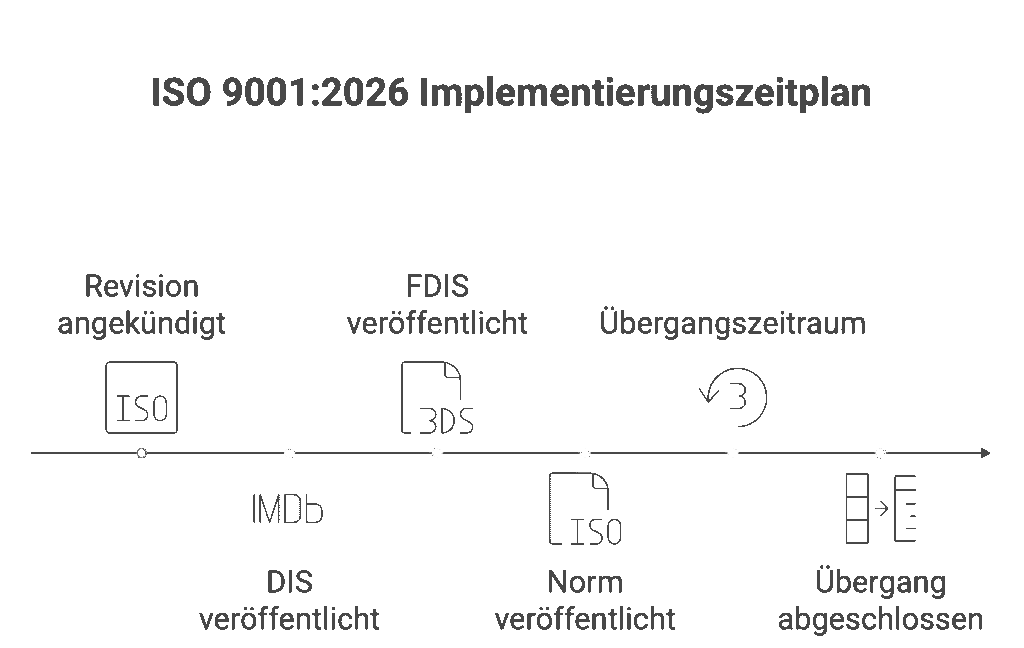
The ISO 9001:2026 revision introduces updated requirements that organizations need to anticipate now. Learn what’s changing, what stays the same, and how to adapt your quality management system before the new standard takes effect.
Feedback Instead of Complaints? The Key Differences

Complaints and feedback are not the same thing — and treating them identically can cost you valuable customer insight. This article explains the key differences, why the distinction matters for your quality management system, and how to structure a process that captures both effectively.
ISO 9001 vs ISO 9000: Which Standard Fits Your Needs?
ISO 9001 and ISO 9000 are often confused, but they serve very different purposes. ISO 9001 defines the requirements for a certified QMS, while ISO 9000 provides foundational vocabulary and concepts. This guide explains the difference clearly and helps you understand which documents your organization actually needs.
Risk-Based Thinking in ISO 9001: A Systematic Approach to Risks and Opportunities

Risk-based thinking is one of the key concepts introduced in ISO 9001:2015 — requiring organizations to identify, assess, and address risks and opportunities as part of their QMS. This guide explains how to implement risk-based thinking systematically, from context analysis through action planning and monitoring.
Understanding CLAUSE 10 “IMPROVEMENT” ISO 9001:2015

Clause 10 of ISO 9001:2015 focuses on improvement — including nonconformity and corrective action, continual improvement, and innovation. This guide explains each element of Clause 10, what auditors look for, and how to build an improvement culture that goes beyond simply closing corrective actions.
Common Pitfalls in ISO 9001 Implementation

Many ISO 9001 implementations fail to deliver their expected value due to predictable, avoidable mistakes. This guide identifies the most common pitfalls — from treating the QMS as a documentation exercise to neglecting management commitment — and explains how to avoid them for a smoother certification journey and a more effective quality system.
ISO 9001:2015 Requirements of the Standard Simply Explained

ISO 9001:2015 introduces a structure and set of requirements that can seem complex at first. This guide explains the standard’s key requirements in plain language — from organizational context and leadership through planning, operations, and continual improvement — making it accessible for teams at any stage of implementation.

